Before starting any development project in the Capital Region, it helps to understand the four dominant construction sectors that shape regulation, inspection sequencing, and long-term property performance.
Understanding the Big Four Categories
The industry is typically organized into Residential, Commercial, Industrial, and Infrastructure construction sectors.
Although they share core construction principles, each sector operates under different compliance expectations and risk profiles.
1. Residential Construction
Residential construction centers on living spaces designed for occupancy by individuals and families.
Across Albany’s surrounding suburbs, housing projects reflect broader economic and migration trends.
Inspection sequencing for residential work is often less complex than what is required in commercial environments.
2. Commercial Construction
Commercial construction includes office buildings, retail centers, restaurants, medical facilities, educational institutions, and mixed-use developments.
The Capital Region’s economic framework relies heavily on commercial property investment and tenant build-outs.
Commercial projects face stricter life-safety requirements, ADA accessibility standards, occupancy classifications, and fire-resistance mandates.
Because of this complexity, businesses often rely on an experienced commercial general contractor to coordinate permitting, trade sequencing, and compliance documentation.
Model building codes from the International Code Council shape inspection requirements across commercial projects.
3. Industrial Construction
This sector focuses on facilities built for production, storage, and heavy operational use.
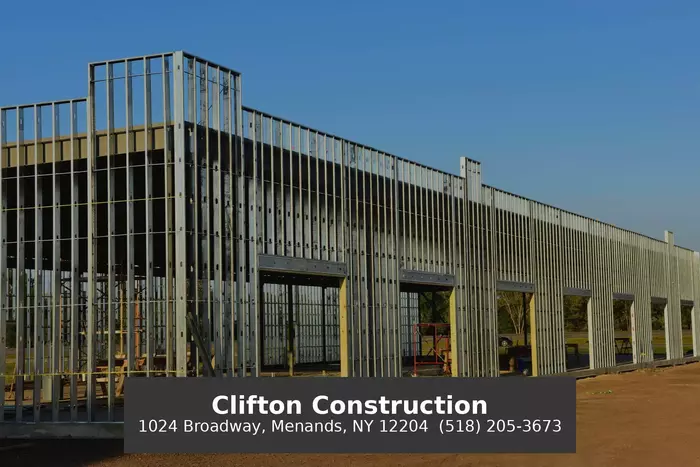
Structural design in industrial environments prioritizes load-bearing capacity and equipment integration.
Although fewer in number than commercial retail or office projects, industrial facilities play a critical role in regional logistics and economic stability.
4. Infrastructure (Heavy Civil) Construction
Heavy civil construction focuses on public systems that support community growth.
Public funding mechanisms and long approval timelines define most infrastructure builds.
Roadway improvements and utility upgrades make commercial property development viable.
Comparing the Four Sectors
While all four sectors are essential, commercial construction often carries the greatest balance of regulatory scrutiny and financial exposure.
That is why businesses frequently begin by searching for commercial contractor near me in Clifton Park NY when planning expansion or renovation.
Conclusion
The Big Four construction sectors—Residential, Commercial, Industrial, and Infrastructure—each shape commercial remodeling Clifton Construction-General Contractor Albany NY how communities grow and function.
For structured commercial development in Albany and the Capital Region, visit Clifton Development Group.
Clifton Construction
(518) 205-3673
1024 Broadway, Menands, NY 12204
https://www.cliftondevelopmentgroup.com